Automation · 9 min read
The Biggest Smart Home Mistakes We're Hired to Fix
We take over troubled systems every month. These are the mistakes that cause them — in design, wiring, platform choice, and dealer selection — and how to avoid every one.
A meaningful share of our work is rescuing systems other people built. It's given us an unusual education: we've seen exactly how smart homes go wrong, over and over, across every brand and budget. The encouraging news is that the failures are remarkably repetitive — the same handful of mistakes, made at predictable moments. Here they are, so you never make them.
Mistake 1: Buying gadgets instead of designing a system
A doorbell from one app, locks from another, retail WiFi gear, a voice assistant taped over the top — each purchase reasonable, the sum unusable. Twenty apps is not a smart home; it's a part-time IT job. Real automation starts with one control philosophy and an integration plan, then chooses devices that serve it. The house should converge toward one interface, not fragment into a drawer of remotes and a phone full of logins.
Mistake 2: Treating the network as an afterthought
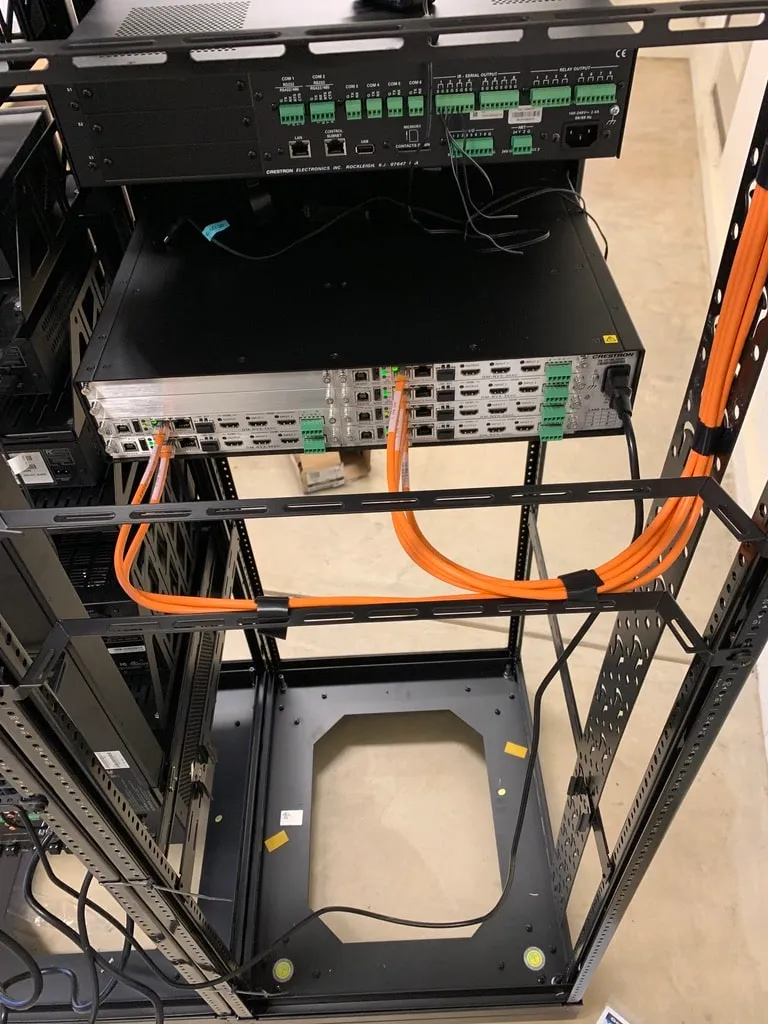
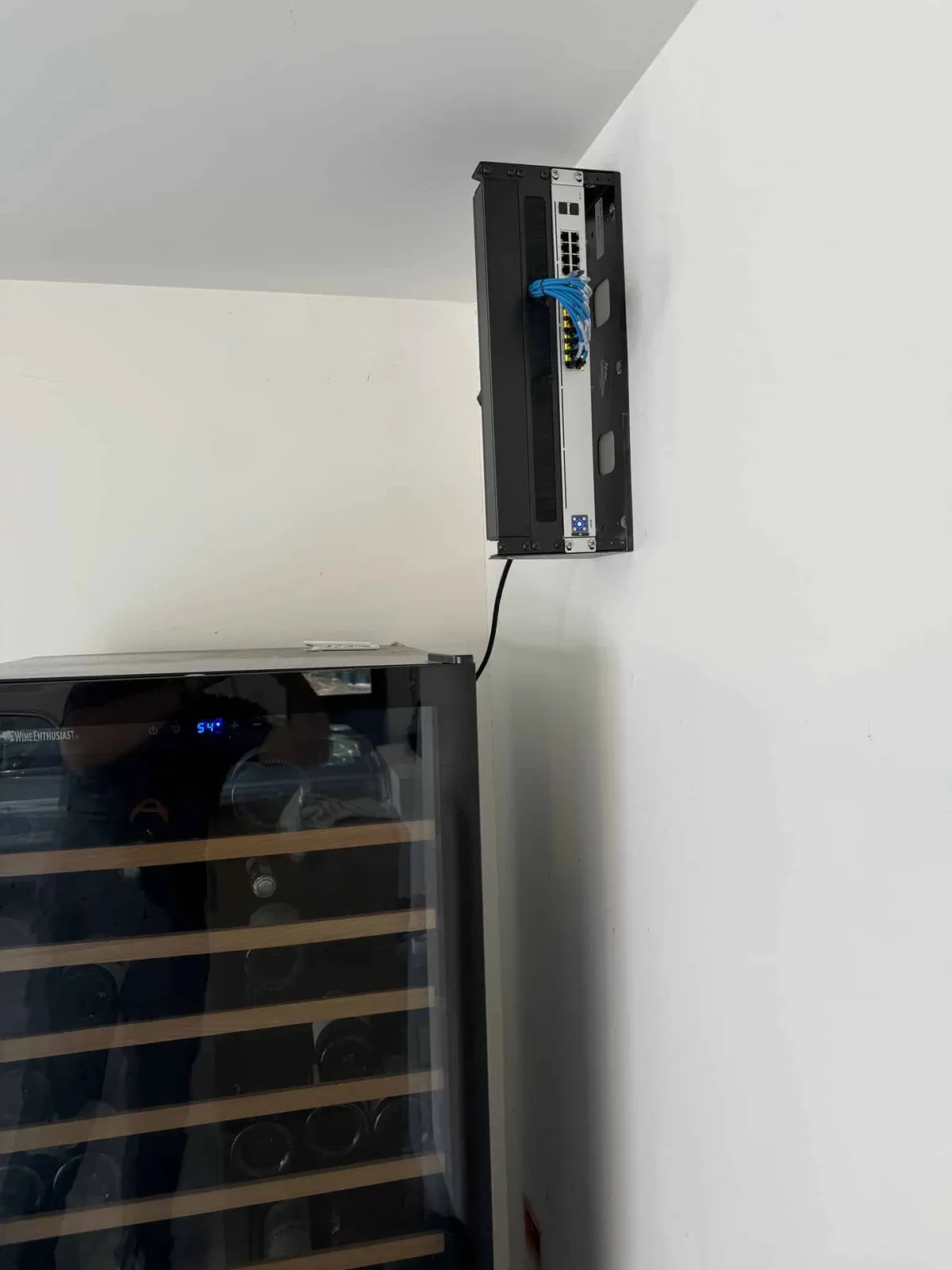
The network is the foundation under every other system — and it's the single most common root cause we find in troubled homes. A consumer router in a closet cannot carry a hundred devices, cameras, streaming, and control traffic across a large plaster-walled home. Symptoms get blamed on everything else: 'Sonos is flaky,' 'the cameras drop,' 'the app is slow.' The cure is engineered networking — wired access points, enterprise routing, proper switching — sized to the actual house.
Mistake 3: Skimping on wiring while the walls were open
Wireless is a convenience layer, not a foundation. Every takeover with an unfixable ceiling — the room that can never get a speaker, the gate that can never get a camera — traces back to a framing-stage decision to save a few hundred dollars on wire and conduit. Our full pre-wire specification guide exists for exactly this reason; the short version is: overshoot generously, and put conduit where opinions might change.
Mistake 4: Choosing the platform by price alone
The cheapest bid usually means a lighter-weight platform stretched past its ceiling, or a heavyweight platform configured minimally. Both end the same way: a system the family outgrows or fights. Match the platform to the home's scope honestly — our full comparison guide walks through exactly how — and remember that programming quality matters as much as the logo on the processor.
Mistake 5: Hiring without checking what happens after install day
The most damaging mistake isn't technical. Systems fail slowly — a device dies, a service changes, a storm reboots things — and homes whose integrator vanished have no path back to good. Before hiring anyone (including us), ask: Do I get my own admin credentials? Is the system documented — labeled wiring, as-builts, a handoff package? Is there a service plan with real response times? Who exactly answers when something breaks in two years? An integrator who hesitates on the credentials question is planning to hold your home hostage.
Mistake 6: Locking yourself to one installer forever
Undocumented programming, withheld passwords, proprietary lock-in — we inherit these situations constantly, and unwinding them is most of the work in a takeover. Everything we build ships with the client's own credentials and full documentation, precisely so that no one, including us, ever has leverage over your own house. Demand the same from whoever you hire.
Frequently asked
What is the most common smart home mistake?+
Under-building the network. It's the invisible foundation under audio, video, cameras, and control, and a consumer-grade router in a large home produces symptoms that get blamed on every other system. Engineered WiFi and wired backbone fix a remarkable share of 'broken' smart homes.
Why does my expensive smart home system not work well?+
Usually one of three roots: a weak network underneath it, rushed or unmaintained programming, or a platform stretched beyond its intended scope. A professional audit isolates which — often the fix is stabilization and reprogramming rather than replacement.
What should I ask before hiring a home technology integrator?+
Four questions reveal almost everything: Do I receive my own admin credentials? Will the system be documented with labeled wiring and as-builts? What does your service plan look like after install? And can I speak to a client from three-plus years ago? Hesitation on the first two is disqualifying.
Can a badly installed smart home be fixed without starting over?+
Usually, yes. Wiring and hardware are typically salvageable; the problems live in network design, programming, and documentation. Our takeover process — audit, document, stabilize — rescues most systems for far less than replacement, and tells you honestly when replacement really is the better path.