
How we work
Engineered, not assembled.
Most integrators start with a box. We start with a drawing. Every Firebird project follows the same six-phase method — the discipline that lets a system disappear into the architecture and keep working for years, not seasons.
- 01
Consult
We learn how you actually live in the space.
Every project starts with how you live, not with a product list. We walk the property, listen to how each room is used, and map what you want it to feel like. Nothing gets specified until we understand the brief — and the architecture it has to disappear into.
- 02
Engineer
The system is designed on paper before anything is ordered.
This is where rigor pays for itself. Before a single box is bought, we design the system on paper — load calculations, signal paths, rack elevations, network topology, and a labeled wiring schedule. You get a system engineered to spec, not assembled on a hunch.
- 03
Pre-wire
Clean, labeled runs coordinated before the drywall.
We coordinate with your builder and pull infrastructure before the walls close — clean runs, proper separation of power and data, and headroom to grow. The part no one ever sees is the part everything else depends on, so we get it right while it's still open.
- 04
Install
Equipment racked and mounted, documented as we go.
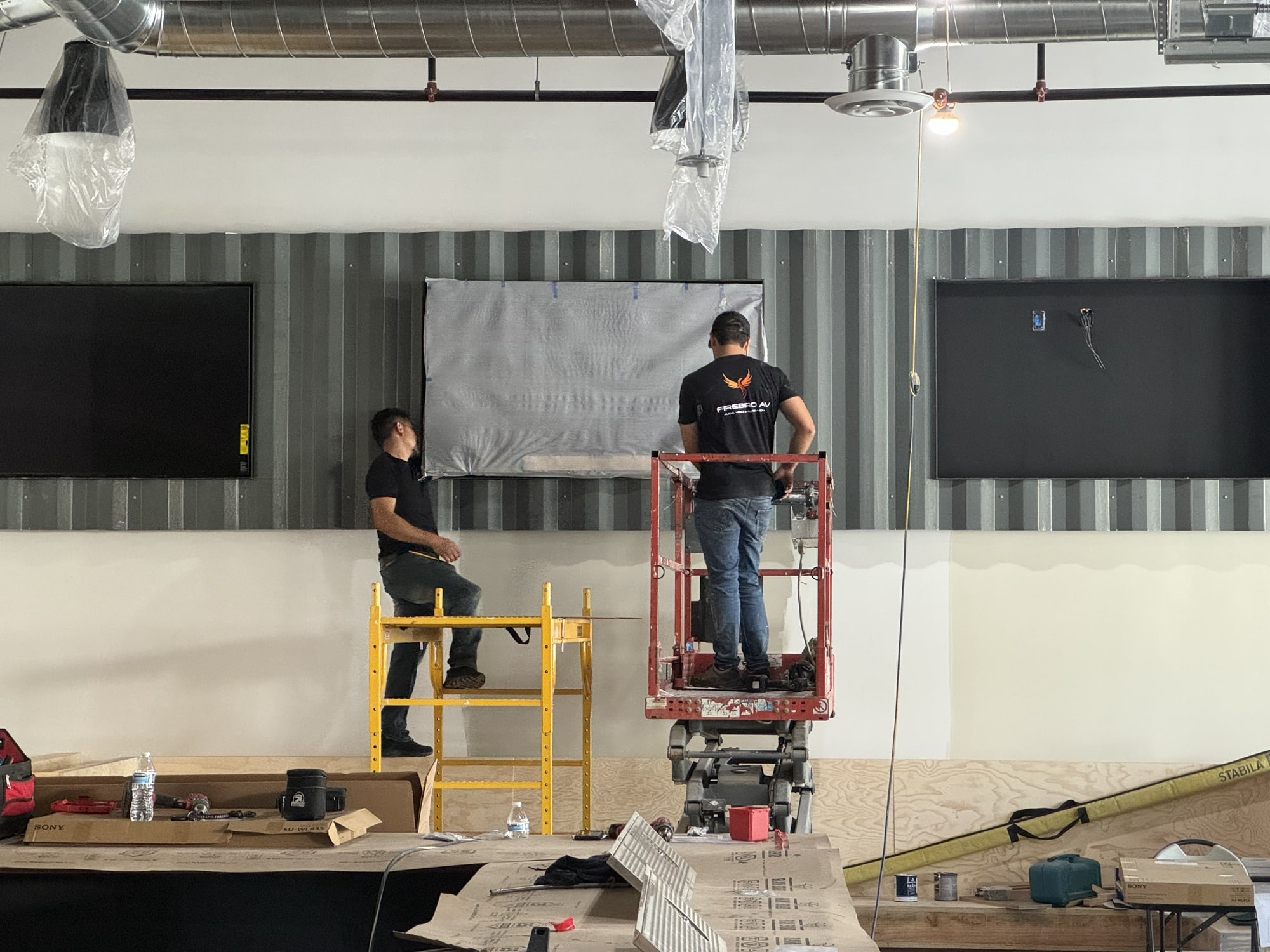
Racks are built and labeled, devices are mounted, and finishes are protected throughout. We work tidy and document as we go, so the system that gets handed over is the system that's drawn — no surprises behind the panel.
- 05
Calibrate
We measure the room and tune the system to it.
Anyone can connect a box. We measure the actual room and tune the system to it — light balanced to the hour, sound corrected with Dirac and Dolby tools, video calibrated to reference. The result is correct, not merely functional.
- 06
Steward
You own the documentation, the codes, and our accountability.
Every system ships with a blueprint of itself and your own admin credentials — no black boxes, no held-hostage passwords. From there we stay accountable, with monitoring and support plans that keep the system performing for years. Stewardship, not dependence.
The finish standard
Working is the baseline. Finished is the standard.
There are capable integrators in this market, and a system that works on day one is table stakes. We spend our extra hours on everything after it works: the details most clients never see, and the ones they live with every day. It is the difference between a system that was installed and one that was perfected.
Equipment racks
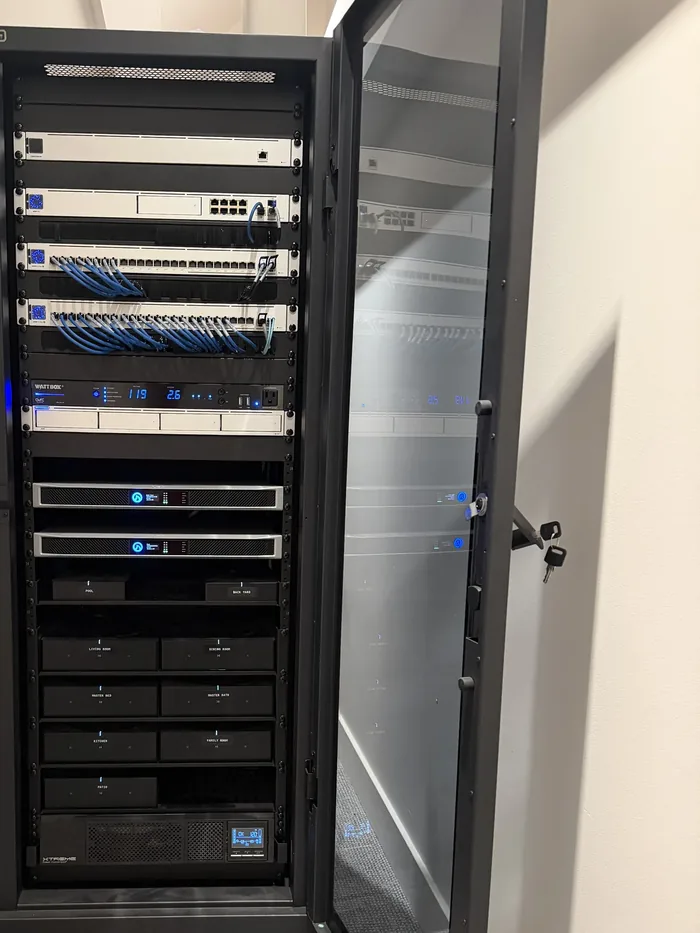
Racks are drawn as elevations before assembly, built with ventilation, power conditioning, and service loops, and dressed until the back of the rack looks as considered as the front.
Trim & finish
Keypads, plates, grilles, and displays set plumb, level, and flush with the finish work, chosen to sit quietly in the room. If it looks bolted on, it goes back.
Wire management
Every conductor labeled at both ends, bundled, terminated cleanly, and recorded in your documentation, so a change five years from now starts from a drawing instead of an exploration.
Support
The team that engineered your system is the team that answers for it, with remote diagnostics, documented fixes, and a real person on the phone. Support is part of the design, not an afterthought.
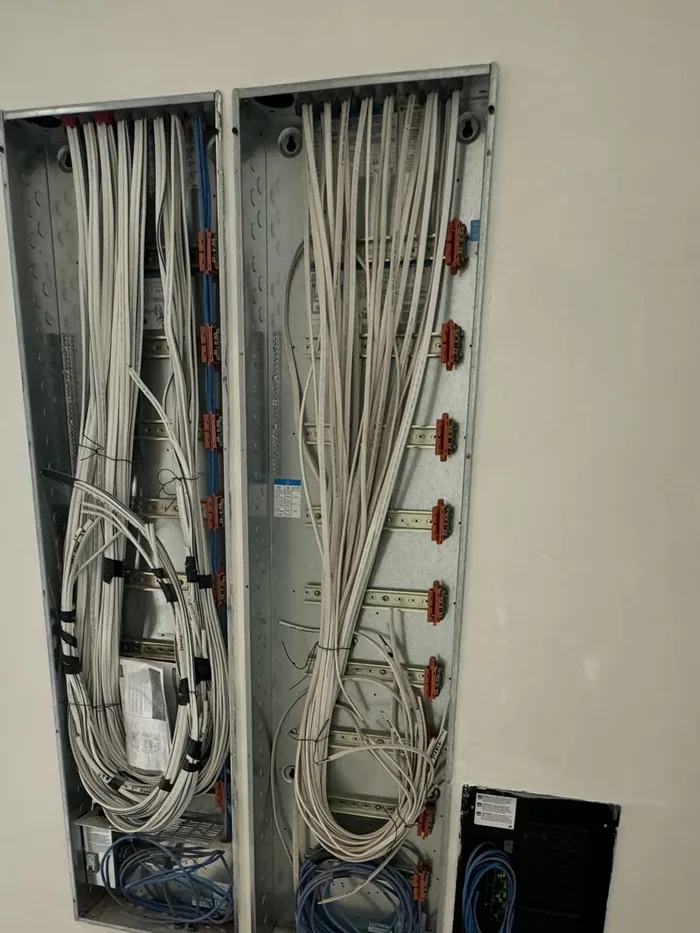 Before
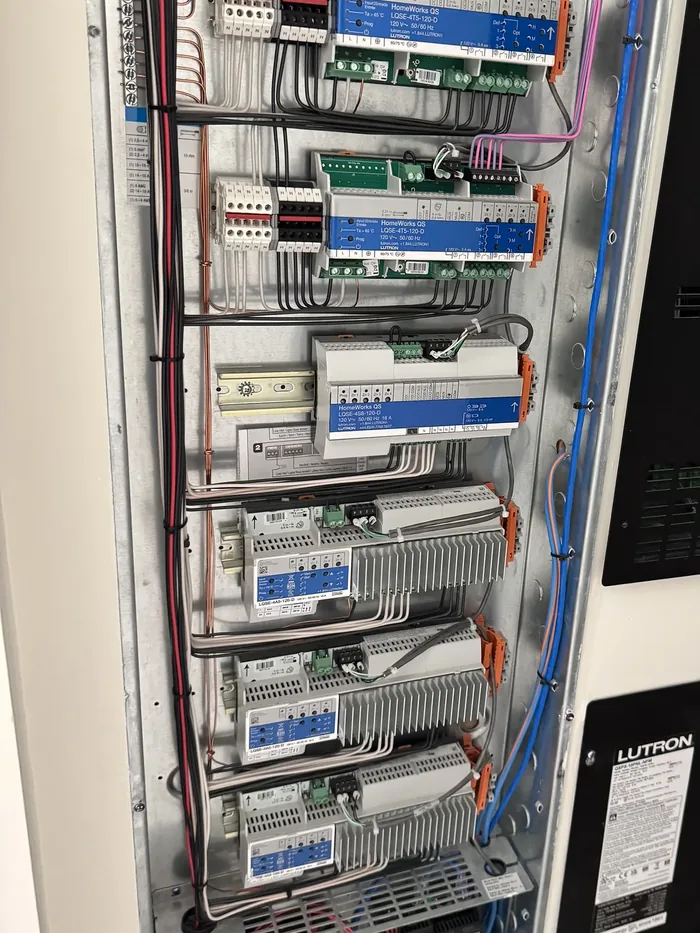 After
After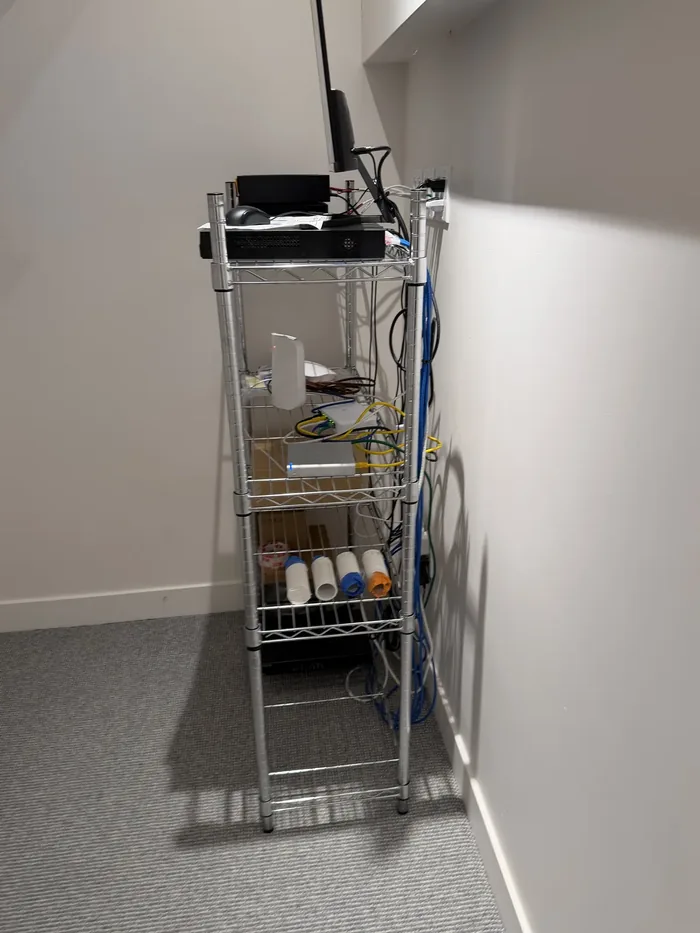 Before
 After
After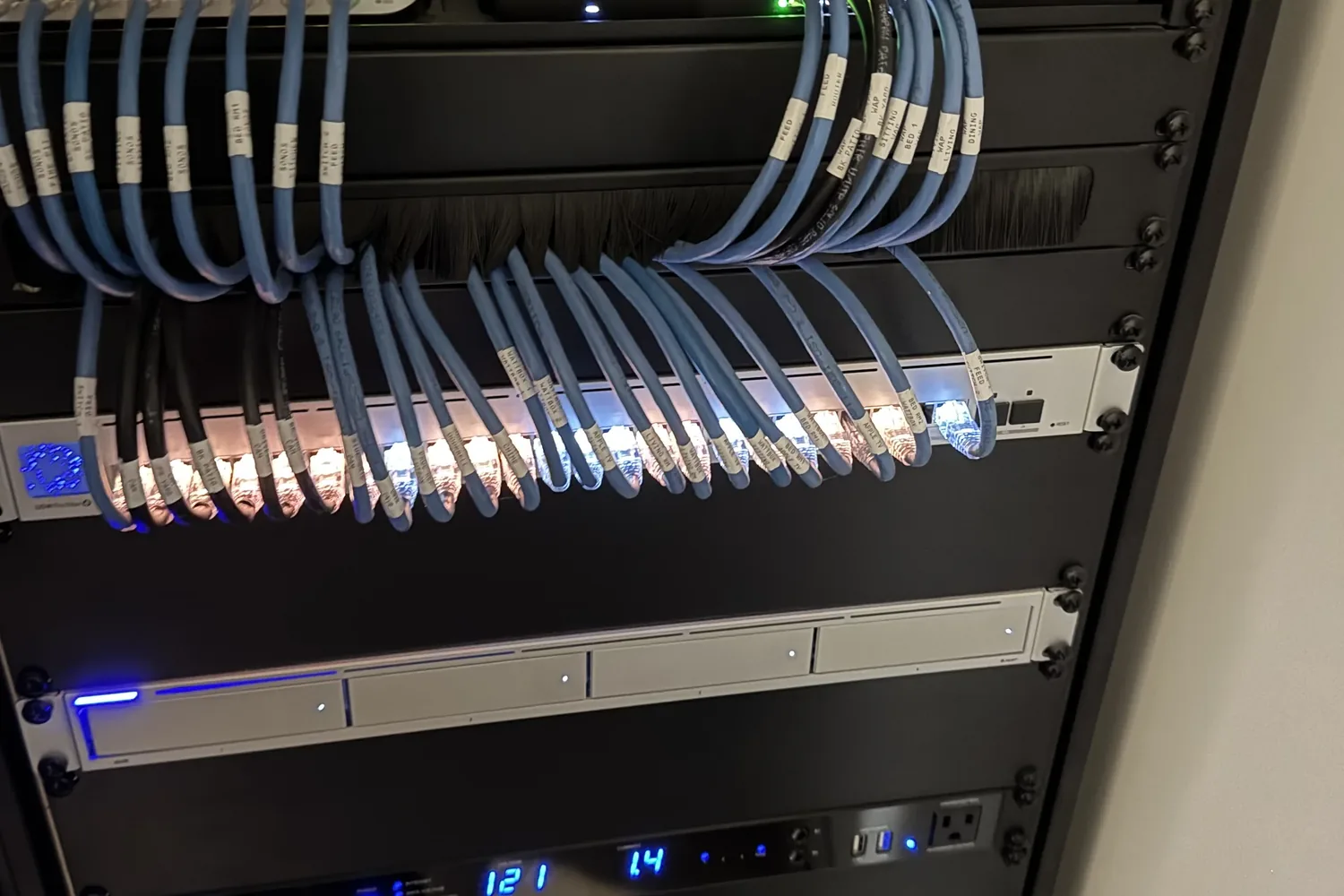
Why it matters
The part no one sees is the part everything depends on.
Designed before it's bought
Load calculations, signal paths, and rack elevations on paper first — so the system is engineered to spec, not assembled on a hunch.
Documented, and yours
You receive a blueprint of your system and your own admin credentials. No black boxes. No held-hostage passwords.
Built to be serviced
Labeled runs and clean racks mean future work starts from a blueprint instead of a guess — a fix is a phone call, not a forensic project.

Begin
Start with a conversation, not a quote.
Visit the private showroom by appointment, or tell us about your project and we'll be in touch within one business day.