Local Knowledge · 7 min read
Salt Air vs. Your Outdoor AV: Engineering Technology for Coastal Santa Barbara
Within a mile of the ocean, ordinary outdoor speakers and TVs corrode in a few seasons. How we specify, mount, and maintain outdoor technology that survives the South Coast.
Salt air is the quiet destroyer of outdoor technology on the South Coast. From the Mesa to Montecito's beach lanes to Summerland's bluffs, we've opened outdoor speakers that were rated 'weatherproof' and found green corrosion across the crossover board after two seasons. Weatherproof and marine-grade are not the same thing — and the difference is invisible on the showroom floor.
What salt air actually does
Marine air carries microscopic salt particles that settle on every surface and pull moisture from the air. On metals, that means galvanic corrosion — terminals, grilles, brackets, and fasteners pit and seize. On electronics, salt-laden condensation bridges circuit traces and eats solder joints. Fog and marine layer make it worse: the daily wet-dry cycle concentrates salt exactly where you don't want it. Within roughly a mile of the water, everything outdoors lives in this environment full-time.
How we specify for the coast
- Genuinely marine-rated speakers: sealed drivers, non-corroding composite or powder-over-anodized enclosures, stainless or brass hardware, and conformal-coated electronics. Our landscape systems from Origin Acoustics' Ambisonic line are engineered for exactly this exposure — it's a core reason we carry them.
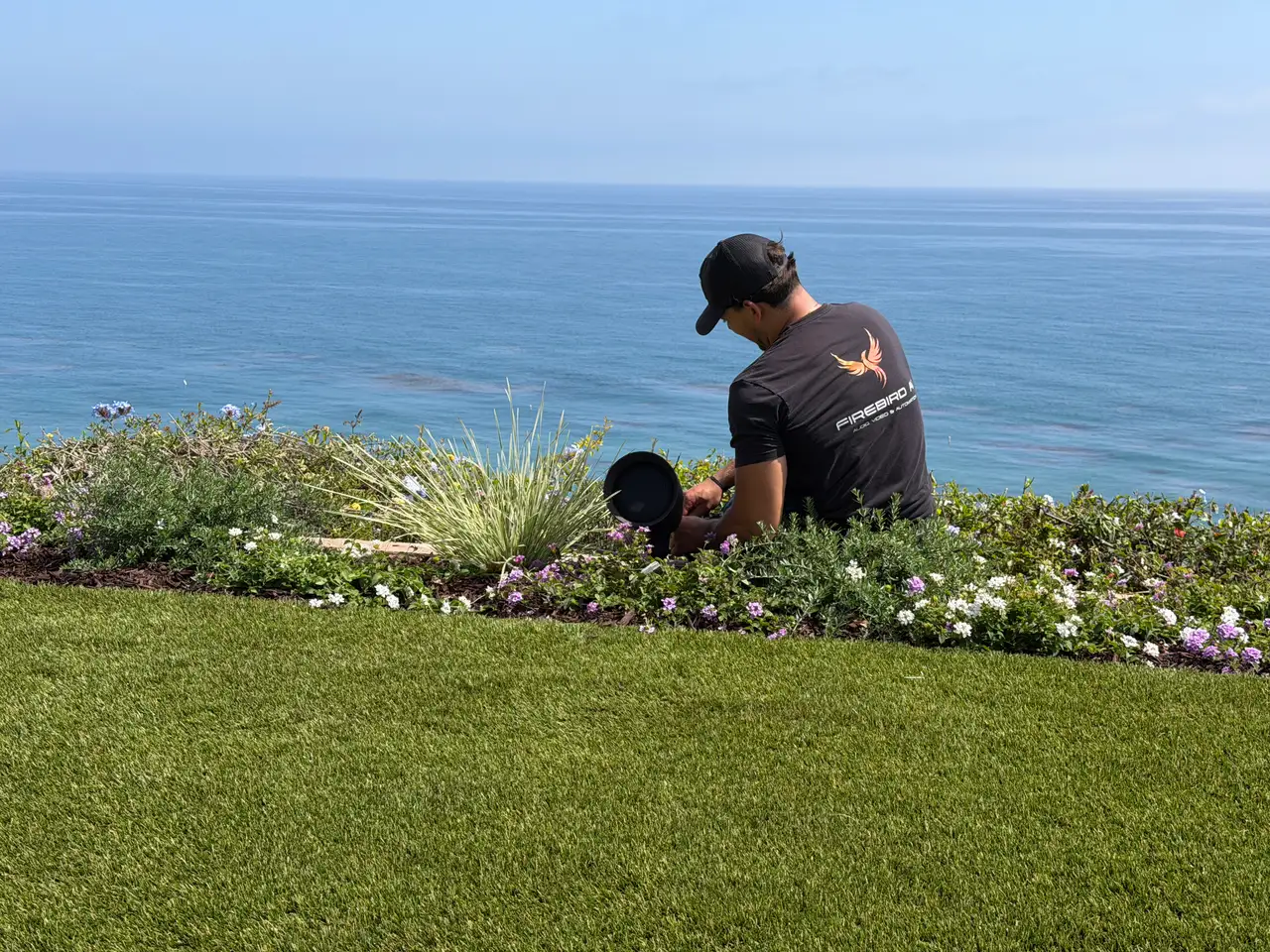
- Buried and shaded placement: landscape satellites in planting beds and subwoofers below grade see far less direct salt spray and sun than wall-hung boxes — and sound better doing it.
- Outdoor displays, not sacrificial TVs: purpose-built outdoor displays with sealed, ventilated enclosures and marine coatings. An indoor TV under a patio cover near the ocean is a two-year appliance.
- Stainless everything: mounts, fasteners, and brackets in 316 stainless. The speaker surviving doesn't help if its bracket rusts through.
- Connections done right: gel-filled or heat-shrunk waterproof splices, drip loops, and dielectric grease on every outdoor termination — corrosion starts at the connection point.
- Ventilated, protected power: outdoor-rated enclosures for transformers and amplifier nodes, placed out of direct spray and heat.
Design beats replacement
The cheapest outdoor system is the one you buy once. Marine-grade gear costs more up front and repays it several times over in equipment that still works — and still looks right — five and ten years in. It's the same philosophy we bring to everything: engineer for the actual environment, document it, and maintain it lightly instead of replacing it repeatedly. A quick annual rinse-and-inspect on exposed hardware extends life further; we build it into our service plans for coastal properties.
Frequently asked
How close to the ocean do I need marine-grade outdoor equipment?+
As a working rule, within about a mile of the water we specify marine-grade throughout — closer than a quarter mile, without exception. Salt exposure drops with distance but fog and onshore winds carry it well inland; canyon mouths and bluff-tops often see more exposure than the map suggests.
Can I put a regular TV on my covered patio near the beach?+
You can, and it will work — briefly. Indoor panels lack sealed electronics and corrosion-resistant hardware, and coastal humidity gets everywhere a cover doesn't. Purpose-built outdoor displays cost more and are the only version of this purchase you make once.
What are the best outdoor speakers for coastal homes?+
For properties near the water we lean on Origin Acoustics' Ambisonic landscape line — sealed, marine-engineered satellites and buried subwoofers designed for harsh exposure — supplemented by marine-rated architectural speakers in covered areas. The right answer depends on the property; the wrong answer is anything only rated 'weather-resistant.'
Do outdoor cameras corrode too?+
Yes — housings, mounts, and especially connectors. We specify sealed marine-appropriate cameras, stainless mounts, and waterproofed terminations, and we position them out of direct spray where coverage allows. A corroded connector is the most common cause of a 'dead' coastal camera.